
Emotional HEALING
7 Questions for a Healthier Romantic Relationship and 9 Tips
By Aurelija Aspen | November 20, 2026
What makes a relationship truly fulfilling? Is it how much time you spend together, how well you understand each other, or how loved and appreciated you feel? And when something feels missing, how do you know what needs to change?
A healthy romantic relationship doesn’t happen by accident. It is something two people choose to create together, through the small things they do every day: the attention they give, the care they show, the conversations they have, and the effort they make to stay connected.
It is a relationship in which both partners feel valued, respected, emotionally safe and appreciated. It doesn’t mean that everything is always easy or that disagreements never happen. What matters is how two people treat each other and how willing they are to understand, support and grow together.
In a conversation on The Diary of a CEO, Christopher Kerr, Chief Medical Officer of Hospice Buffalo, shared a powerful observation from his work with people approaching the end of their lives. Looking back on their experiences, people rarely speak about their achievements or possessions as what mattered most. Instead, what stands out is love: the love they gave, the love they received, and the meaningful connections they built with others.
It is a reminder that, ultimately, the quality of our relationships has a profound impact on the quality of our lives. So, how can you create a relationship in which both you and your partner feel loved, valued, and understood? A good place to start is not by asking what your partner needs to change, but by becoming more curious about your own experience.
The following seven questions will help you look at your relationship from a different perspective, better understand what you need, and recognise where there may be room for growth.
Seven Questions to Help You Reflect on Your Relationship
Start by looking at the relationship from your own perspective. If you are single, you can use these questions to reflect on an important relationship from your past and consider what you learned from it.
Rate each question from 0 to 10, where 0 = Not at all and 10 = Very much. Answer honestly rather than choosing the score you think you should give.
1. How valued and important do I feel to my partner?
2. How loved do I feel in this relationship?
3. How secure do I feel about my partner's commitment to the relationship?
4. How much joy, variety, and pleasant surprise does my partner bring into our relationship?
5. How much do I feel that we are growing together?
6. How much do I feel that my partner contributes to the relationship?
7. How strongly do I feel that my partner chooses me?
Your answers can help you see where the relationship feels strong and where something may need attention. They are not a score for your partner. They are a way to understand your own experience and identify what you may want to talk about.
How Does My Partner Experience Our Relationship?
Now look at the relationship from your partner’s perspective. Treat this as an exercise in cultivating empathy and understanding how the other person might experience the same relationship. What really matters here is honesty.
Imagine that you are your partner. Step into their experience and feel what it might be like to be in this relationship as them. Rate each question on a scale from 0 to 10, where 0 = Not at all and 10 = Very much.
1. How valued and important does my partner feel in this relationship?
2. How loved does my partner feel by me?
3. How secure does my partner feel about my commitment to them?
4. How much joy, variety, and pleasant surprise does my partner feel I bring into our relationship?
5. How much does my partner feel that we are growing together?
6. How much does my partner feel that I contribute to our relationship?
7. How strongly does my partner feel that I choose them?
The goal of this exercise is to gain clarity about how your partner experiences the relationship. You may believe you are showing love in a particular way, while your partner may not recognise it as love. If so, that difference is worth discussing.
Your Next Step: Have a Constructive Conversation with Your Partner
- Complete the seven questions honestly, considering both your own perspective and your partner's experience.
- Identify the two areas where you feel the greatest disconnect.
- Ask your partner to complete the same exercise, considering both their own perspective and yours.
- Compare your experiences without judging each other, keeping in mind the purpose of this exercise: to better understand each other.
- Choose one small change you can both work on this week.

Before you start talking, be clear about why you are having this conversation. What is the goal? What do you want to achieve as a couple?
Why Two People Can Experience the Same Relationship Differently
Two people can share a home, routines, and experiences and still understand their relationship in different ways.
Our beliefs, upbringing, past experiences, emotional skills, and expectations all influence how we communicate and respond to each other.
Research into the brain and emotional abilities can help us question some familiar assumptions about men and women. Below, you’ll find perspectives that can open the door to greater understanding and more fulfilling relationships.
The Brain Is Not Simply Male or Female
In a 2015 study published in the Proceedings of the National Academy of Sciences, Daphna Joel and her colleagues examined MRI data from more than 1,400 people.
They found some average differences between male and female participants, but also substantial overlap. The researchers described individual brains as a mix, or “mosaic”, of features rather than two clearly separate types.
This research invites us to reconsider a common assumption: We should not assume that men cannot understand emotions simply because they are men, or that women are naturally irrational or overly emotional simply because they are women.
People of all genders can develop emotional awareness, empathy, rational thinking, tenderness, and vulnerability. Individuals differ, and these abilities can also be learned and strengthened.
Emotional Intelligence Is Made Up of Different Abilities
A 2026 meta-analysis by Hausfeld and colleagues reviewed research on gender differences in emotional intelligence and specific emotion abilities.
The authors found average differences in some areas, but emotional intelligence is not one single skill. Results depend on which ability is being measured.
Recognising emotions, regulating your own emotions, and responding with care to someone else’s emotions are related, but they are not the same thing.
Someone may be good at staying calm but find it difficult to identify or talk about feelings. Another person may quickly notice what others are feeling but struggle to regulate their own emotions when they feel rejected or insecure.
Neither ability alone tells us how emotionally healthy someone is. Emotional maturity also plays an important role in how we understand ourselves and relate to others. You can read more about the signs of emotional maturity in men and women and how they influence our relationships.
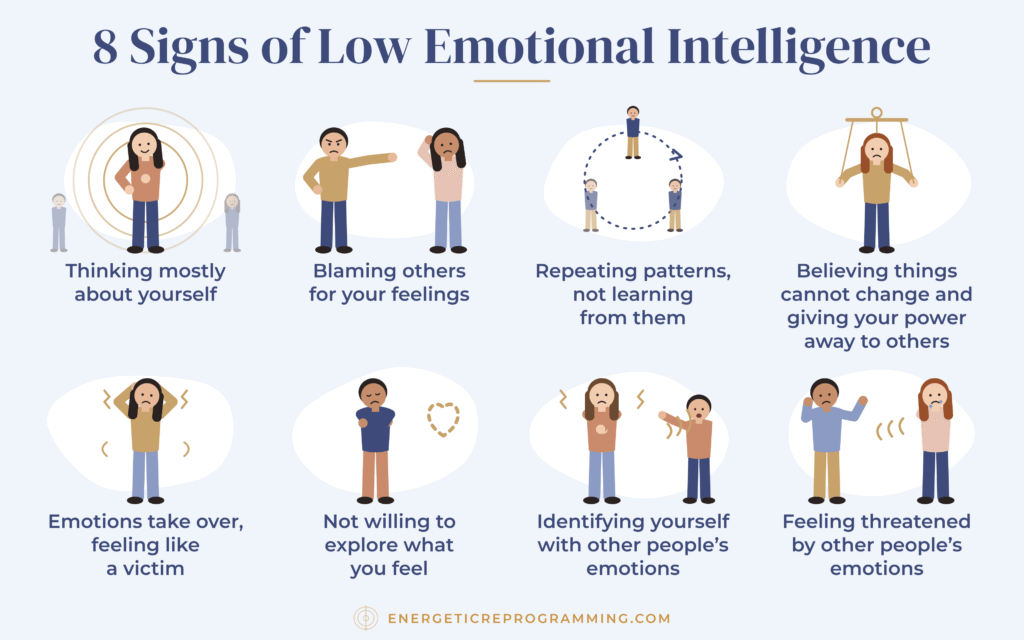
Emotional intelligence involves more than simply recognising emotions. It also includes the ability to regulate our own emotional responses and respond thoughtfully to the emotions of others.
Stress Can Change the Way We Support Each Other
Stress also affects how we respond to a partner. In a 2015 study, Guy Bodenmann and colleagues observed men and women providing support to a stressed romantic partner. When participants were not highly stressed themselves, the quality of support was generally similar. When participants were stressed, men in the study provided lower-quality support in response to emotionally expressive distress.
The difficulty might not be a lack of love, but a lack of emotional capacity in that moment. Recognising this can help couples talk about stress before it turns into distance.
9 Things That Can Make a Difference in a Relationship
Research can help us understand some of the patterns that appear in relationships, but it cannot tell us exactly what our partner needs.
That takes attention, honest conversations, and a willingness to learn about each other.
The following ideas are not rules about all men or all women. They are reminders that can help either partner feel safer, appreciated, and understood.
1. Do Not Expect Your Partner to Express Love Exactly as You Do
One person may show love through practical help, while another expresses it through affection or words. Learn to recognise the different ways you show care. At the same time, be willing to make an effort to express love in ways your partner can recognise and receive.
2. Do Not Punish Vulnerability
Men and women can both experience fear, insecurity, loneliness, rejection, and vulnerability. If your partner shares something painful, don’t minimise their feelings or use what they shared against them later. Bringing it up to win an argument can make it harder for them to open up again. Respect the trust it took for them to open up.
3. Show Appreciation
Do not assume your partner already knows what you appreciate about them. Say it. Be specific about the things you notice. For example: “Thank you for taking care of that.”, “I admire the way you handled that situation.” Appreciation should go both ways. Both partners need to feel that their efforts are noticed.
4. Do Not Confuse Communication Style with the Amount of Love
A person who speaks less is not necessarily less loving, and a person who speaks more is not necessarily more demanding. Look at the whole relationship, including actions, consistency, and the way you treat each other.
Some of us need time to understand what we feel before we can talk about it. If your partner needs a little space, respect that while also agreeing on when you will reconnect. Taking time to process is different from repeatedly refusing to communicate.
5. Ask for What You Need
Even a caring and perceptive partner cannot read your mind every time. If you need affection, attention, or reassurance, say so. For example: “I would really love a hug and some attention tonight.” Clear guidance gives your partner a better chance of understanding what would help.
6. Pay Attention to How You Express Criticism
Feel the difference between saying: “I feel that we have been spending less quality time together.” And saying: “You are a terrible partner. You never do anything for me.” The first describes an experience and opens the door to a conversation. The second attacks someone’s identity and is more likely to create defensiveness. The same principle applies when either partner is expressing dissatisfaction.
7. Learn How to Repair After Conflict
Every couple disagrees. What matters is whether both people can acknowledge when they have caused hurt, apologise sincerely, and make an effort to do things differently. An apology matters, but so does what happens afterwards. You can even talk with your partner in advance about how you would both like to handle such situations when they arise.
8. Take Responsibility for Your Own Emotional Regulation
Your partner can support you, but responsibility for your emotional well-being belongs to you. Learning to understand and regulate your own emotions can make it easier to communicate your needs without expecting your partner to carry the weight of every difficult feeling.
Make inner work part of your life. It will not only help you feel better, broaden your perspective, and heal past wounds, but also enable you to live a more fulfilling and happier life and experience relationships in a deeper, more meaningful way. If you would like to take a practical step towards improving your emotional wellbeing, you can start right now with these 10 questions and 2 exercises. They are free and easy to work through.
9. Have a regular relationship check-in
Dedicate time and space to sharing your experiences with each other. Set aside time to talk about what you have appreciated about each other over the past week or weeks, what has made you feel good, your individual goals and goals as a couple, and areas where you could make improvements. Take turns sharing your thoughts and listening to each other.

A healthy, lasting relationship is built through everyday acts of care, understanding, appreciation, and mutual effort. It is not just about what feels good in the moment, but about creating something meaningful that can grow stronger over time.
Become the Partner You Would Like to Have
Understanding your relationship and recognising what could be improved are important first steps. But even when you know how you would like to respond, you may find yourself reacting in ways you don’t fully understand.
Have you ever noticed that a seemingly small situation triggers a much stronger emotional reaction than you would expect? Or that you keep experiencing similar frustrations, even when you consciously want things to be different?
This may happen because our reactions are not always influenced by what is happening in the present. Past experiences, unresolved emotional wounds, limiting beliefs and the way we see ourselves can all influence how we perceive situations, respond to others and experience our relationships.
What can this look like in everyday life?
In my work with people, I often encounter situations where an emotional reaction is much stronger than the present circumstances alone would seem to explain.
Recently, I worked with a client who felt extremely irritated by her partner’s focus on healthy eating. There was nothing inherently harmful about his behaviour, yet it triggered such a strong emotional reaction that it affected how she felt around him.
Using Energetic Reprogramming Method™, we worked on releasing the emotional energy connected to this intolerance. As the emotional charge was released, her perspective changed. She was able to look at the same behaviour with greater neutrality. The intensity of her reaction decreased from 8 to 4 after just one session. What had previously annoyed her so much no longer had the same emotional weight.
Could working with your emotional patterns help you experience situations differently?
Understanding why you react in a particular way is an important first step. But you may also want to explore and work with the emotional patterns behind those reactions.
Through the Energetic Reprogramming Method™, I offer individual sessions to support people in releasing limiting emotional patterns that may influence how they feel, perceive situations and respond to others. If you are curious about this approach, you can read more about what Energetic Reprogramming is.
This work is not about changing your partner, excusing behaviour that goes against your values, or accepting everything in a relationship. It is about gaining greater emotional clarity, developing a different perspective, and feeling more balanced and happier within yourself.
You can explore this work through individual online energy healing sessions.
Frequently Asked Questions
How Can I Improve My Relationship If My Partner Isn't Interested in Personal Growth?
When you consciously choose to work on yourself, heal emotional wounds, and grow, your energy and vibration begin to change. If your partner doesn’t choose the same path, you may gradually find yourselves becoming less aligned. As you continue to grow, you may reach a point where you have two choices: continue honouring your personal growth, even if it means moving in different directions, or continually lower your own energy to maintain the same dynamic. The healthier choice is to remain committed to your growth rather than make yourself smaller to keep the relationship comfortable.
Why Do I Feel Emotionally Disconnected from My Partner Even Though I Love Them?
A harmonious relationship requires both partners to feel seen, heard, safe, and acknowledged, with both contributing to the relationship. When your needs, experiences, or feelings are repeatedly overlooked, emotional distance can develop even when love is still there. Another important factor is the influence of external people, such as parents, siblings, friends, and colleagues. When a partner gives more weight to outside opinions than to the emotional harmony and needs within the relationship, the other person may feel that they are no longer being chosen or prioritised. Ultimately, emotional connection grows when both partners choose each other, listen to each other, and protect the space they are creating together.
Can I Improve My Relationship by Working on Myself?
Yes, absolutely. Working on yourself can help improve your relationship, particularly when past experiences, unresolved emotional wounds, or family conditioning influence how you perceive your partner and respond to situations. By releasing these patterns, you can develop greater emotional clarity and create healthier relationship dynamics. However, personal growth can also reveal things you may not have recognised before. For example, if you are in a controlling relationship, becoming more self-aware and reconnecting with your own inner strength can help you regain your sense of agency, recognise unhealthy patterns, and see the relationship more clearly. As you grow, you may begin to recognise whether your partner genuinely respects you, supports your growth, and wants the best for you, or whether their actions suggest otherwise. Ultimately, working on yourself helps you see the truth more clearly, understand what a healthy relationship looks like, and make choices that honour your well-being.
How Do I Know If I Should Stay in My Relationship or Leave?
One question that can help you gain clarity is: Do I want to spend the rest of my life in this relationship if nothing about my partner changes?
After taking responsibility for your own growth and doing the inner work, your answer to this question may become much clearer. If your honest answer is no, it may be a sign that something needs to change. Rather than continuing to wait and hope that your partner will become someone different, use this clarity as a starting point to take action and make decisions that honour your needs, values, and well-being.
A Final Thought
A healthy relationship is not about expecting a man to think like a woman or a woman to think like a man. It is about two people learning to understand each other’s inner worlds, even when those worlds are different.
Take responsibility for your part. Be clear about what you need, and stay curious about your partner’s experience. A relationship needs both people to contribute, listen, and make changes when necessary. Love is not only about what you feel for another person. It is also about learning how to help that person feel loved.