
Real Experiences
Real Stories of Emotional Healing: What Became Possible When You Chose to Change
By Aurelija Aspen | July 28, 2026
My grandmother learned to use a computer at eighty six years old. She was always willing to learn, to grow, to try something new. She inspired me deeply.
There is an assumption that motivation to change reduces with age. And then someone in the second half of their life reaches out to me seeking emotional healing and real transformation. It inspires me every time.
These are real stories of emotional healing, of what became possible when people in their sixties decided that change was still available to them. If you have ever wondered whether real emotional transformation is possible later in life, these experiences may change your perspective.
This post is for anyone who has wondered whether real change, the kind that reaches beneath the surface, is still possible for them. It requires inner work. But it is possible.
Note: Names in this post have been changed to protect privacy.
The Man Who Could Not Feel Anything
When Robert first called me, I had already formed an impression before we had finished speaking.
He was a man of strong opinions, raised to believe that feelings and sensitivity were signs of weakness, not strength. In the environments he had moved through, feeling too much meant functioning less. So he had learned to disconnect from his body, shut down his feelings, and operate in a mode that left little room for anything he could not control. He came to me because his body had begun demanding attention he could no longer ignore.
In our discovery call, I felt something I do not often feel: genuine uncertainty about whether this work was right for him. Because people who live primarily in their minds tend to question everything and search for logical explanations, and what I do works through the emotional, mental, and energetic body, through physical sensation, through the subtle language of energy. And he had spent a lifetime learning not to speak that language.
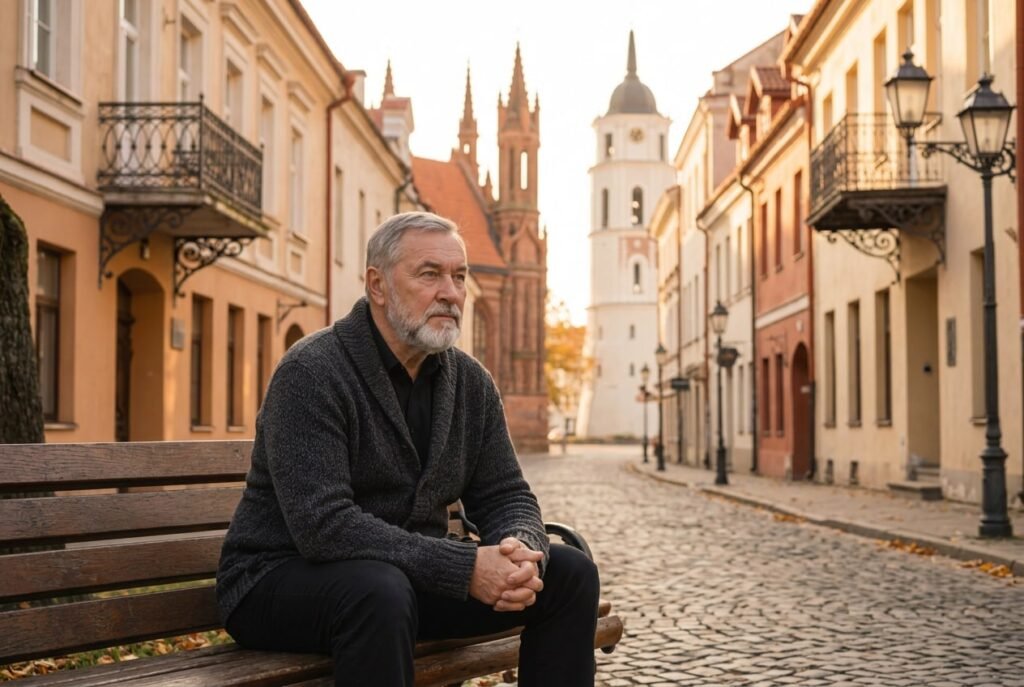
He came without knowing if he could feel anything. Eleven sessions later, he said he had never felt so happy in his life.
At the end of the call, I asked him how he felt about booking a session. He said he wanted that very much. Honestly, I was surprised.
In the first session, his energy shifted. I could see the changes in his energy field, something loosening that had been held for a very long time. But when I asked him what he noticed, he said: nothing. He felt nothing.
In most cases, when someone feels nothing, they do not come back. I understand that completely. If something produces no felt result, not continuing is a reasonable response.
But he chose to continue. Eleven sessions in total.
His physical condition stabilised, his energy field improved, and at the eleventh session, he said: I have never felt so happy in my life.
It was not my willingness to help him that created that outcome. It was his choice. His consistent, against-all-expectation choice to keep returning to something he could not yet feel.
What you choose determines what becomes possible for you.
What Was Running Beneath the Surface
Robert’s disconnection from his body was not a personality trait. It was a structure.
What I work with in sessions are called limiting programs. Layered packages of unprocessed emotion, absorbed ideas, and other energies that formed at specific moments and have been running quietly beneath awareness ever since. These programs live inside what I call outdated stories, narratives that formed at a moment when they made sense and became part of a person’s internal map. The map then directs their life, even when the territory has completely changed.
When a limiting program is active, it does not announce itself. It simply feels like reality. This is why understanding alone is rarely enough. You can know, consciously, that something needs to change. And still something runs underneath that does not shift. Because the program is not held where knowledge lives.
When it is identified and released at the level where it actually lives, something shifts that thinking alone cannot reach. Lightness returns. Clarity returns. The tension that had no name begins to ease.
The Woman Who Traded Her Happiness for an Image
Margaret came from a world of high status, impeccable appearances, and enormous internal pressure.
She had built a life that looked, from the outside, like everything a person could want. A certain kind of partnership, family, wealth, and status. But during all those years, her focus had been on creating an ideal image of her life for others, without tending to her own inner world.
What she had realised was that she had been exchanging her happiness, her authenticity, her actual felt experience of being alive, for how others saw her. And the price had finally become too much to carry.
What shifted in the work: she started to feel lighter, learned to allow herself to rest, became able to express herself with less fear than before, gained more clarity about her own assumptions, learned new things about herself, started listening inward, and rebuilt her connection with herself.
She was in her late sixties when she made that choice. And it enriched her perspective and improved her emotional and mental state in ways she had not expected.

She had built a life that looked, from the outside, like everything a person could want. It took courage to look inward.
The Lens You Do Not Know You Are Wearing
When a limiting program is active, you are not seeing the world as it is. You are seeing it through the filter of everything you have unintentionally collected. One person is critical of you and something inside expands that into everyone is against me. You grew up in an environment where love felt conditional and now you carry a quiet certainty that you are not truly lovable, not as a belief you consciously hold, but as a felt sense that colours every relationship and every moment of vulnerability.
This is what makes these programs so persistent. You cannot argue yourself out of something you cannot see. When the program is released, the lens clears. The same situations look different. Not because the world has changed. Because something in the person has.
The Woman Who Carried Inherited Grief
Something landed in her that day. She had lived with grief for as long as she could remember. Not grief attached to a specific event, not mourning she could name or explain. Simply grief, present in her body like a climate, a heaviness that had always been there. She had assumed it was simply part of her.
At the workshop, she learned something that changed everything: this can be released.
She came to me after. We worked together. And what we found was exactly what she had sensed when she heard me speak. The grief was not hers originally. It was inherited. Generational. A weight that had been passed down through her family line so consistently that it had become invisible, simply accepted as the nature of things.
When it released, she did not immediately know what to say. Then she said: where have I been all my life? For the first time, she could feel who she actually was without it.
She was in her early sixties when that happened.

She had carried it her whole life, not knowing it could be put down. Then she said: where have I been all my life?
What Patterns Actually Cost
Limiting programs do not only affect how you feel. They affect where your energy goes. When a program is active, it directs your attention toward what confirms it. Problems look larger than they are. The focus moves away from what can be created and toward what must be defended against.
This is particularly significant with inherited patterns. Elena was not only carrying her own unprocessed material. She was carrying what her ancestors could not complete, a weight passed down, generation by generation, because nobody had known it could be put down.
When that structure finally released, the energy that had been maintaining it became available again.
What These Three Stories Share
Three very different people. Three very different things they were carrying. Three very different paths that brought them here.
But the same thing in all three: a choice. A willingness to walk toward something even when they could not fully see it. Even when it went against everything familiar. Even when, in Robert’s case, they could not even feel it working.
Look at a young child. The light is bright in them. And that same brightness lives in every one of us, at any age. Inner work is what allows it to surface again.
This is not something you do once. It is a practice, like hygiene. For you to feel better and for those around you to feel better.
Key Takeaways
- Emotional patterns often operate below conscious awareness, which is why understanding them intellectually is rarely enough to shift them.
- Age does not prevent meaningful emotional transformation. These three people changed patterns that had been running for decades.
- Real change usually requires more than intellectual understanding. It requires reaching the level where the pattern actually lives.
- Consistent inner work gradually shifts lifelong patterns. Some shifts happen quickly. Others unfold over time.
- What each person does inside themselves matters beyond themselves.
Is This Relevant for You?
You do not need to be in your sixties for these stories to speak to something in you.
Every person in these stories reached a point where continuing as they were felt harder than trying something new. If you recognise yourself in even one of these experiences, perhaps this is your moment to explore what could change for you.
It is available. The question is whether you are willing to choose it.
If you would like to understand more about the structures behind these patterns and why they persist despite everything you have tried, the post How Subconscious Patterns Form: Why You Keep Repeating the Same Cycles goes into the full mechanism.
And if you would like to understand more about how this work functions in practice, the post What is Energetic Reprogramming? covers the method in full.
A free 15-minute discovery call is simply an honest conversation about where you are and what you are ready to work on. No pressure. No formal application. Just a door, open, if you feel ready to walk through it.
Frequently Asked Questions
Is emotional healing really possible at any age?
Yes. This is one of the things I observe consistently in practice. The subconscious does not age the way the body does, and research on the brain’s capacity to change throughout life supports this. Patterns held there for decades, even those inherited across generations, can still be identified and released. What changes is not the past. What changes is the weight the past is still placing on the present.
What if I have tried therapy or other approaches and nothing has worked?
This is one of the most common things people share when they arrive here. They have done significant inner work. They know themselves well. And something still has not shifted. The Energetic Reprogramming Method™ reaches the subconscious structure beneath the patterns rather than addressing how the patterns express themselves on the surface. It does not compete with therapy or other modalities. It works at a layer most other approaches do not directly address.
Is the Energetic Reprogramming Method™ the same as therapy?
No. The Energetic Reprogramming Method™ works at the subconscious and energetic level, identifying and releasing the structures that generate patterns rather than working with how those patterns express themselves on the surface. Many people who come to this work have already done significant inner work through other approaches and find that this reaches something they had not yet been able to access.
What does it mean that grief or other emotions can be inherited?
Unresolved emotional experiences do not always remain contained within one person’s lifetime. They can travel through family lines, showing up in later generations as patterns, fears, physical tendencies, or emotional states that have no obvious personal origin. This is supported by research into how inherited emotional patterns travel through family lines. When one person does the inner work to release an inherited pattern, the healing does not stop with them. It moves through the genetic line, changing what future generations carry.
How many sessions do people usually need?
It depends on what is being worked with and how long it has been running. Every session brings genuine shifts. Some people come for a single concern and notice significant change within a few sessions. Others choose to work over a longer period, addressing deeper or multiple layers. Robert had eleven sessions before describing the happiest he had ever felt. Elena experienced a profound shift more quickly. There is no fixed number. Sessions are recommended no more than once a week to allow time for integration.
How long does it take to notice a shift?
It varies. Some people notice something within the session itself, a physical lightness, a reduction in emotional charge, a sense that something has eased. Others notice changes in the days that follow. The pace is different for everyone and depends on what is being worked with and how many layers are involved.
Can this work help with patterns that feel like they have always been there?
Yes. Patterns that feel like they have always been there are often the ones with the deepest roots, formed very early in life, inherited, or absorbed from the environment before there was any conscious awareness of what was being installed. The fact that a pattern has been present for a long time does not make it permanent. It makes it something that has simply not yet been reached and released.